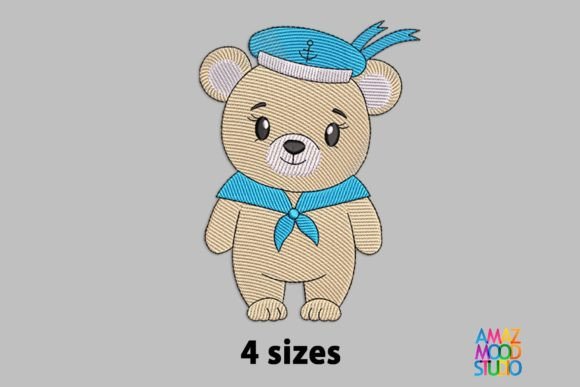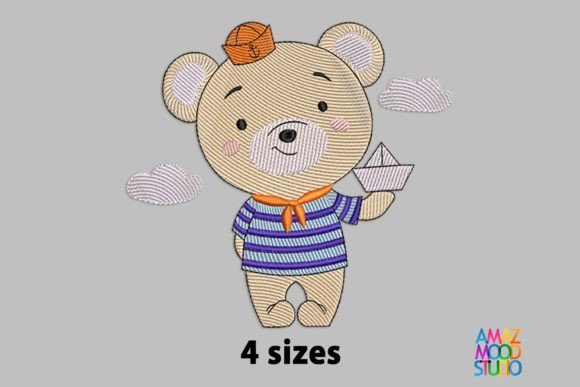
Bear Sailor: A Craft Fair Best-Seller Review
As an embroidery designer who has spent countless weekends standing behind booth tables, I have learned that not every cute design translates into a sale. We often fall in love with intricate details that get lost from three feet away. Today, I am putting Bear Sailor under the microscope. This isn’t just about aesthetics; it is about viability for your small shop product line. If you are an Etsy seller or a local market vendor, you need designs that work hard for you. Let’s evaluate whether this Teddy Bears themed motif earns its place in your digital embroidery file library.
First Impressions and Market Appeal
The title alone suggests a specific mood. Bear Sailor evokes nostalgia, whimsy, and a touch of nautical charm. In the current handmade market, customers are drawn to items that feel personal and story-driven. This design does not scream "modern minimalism," nor does it try to be ultra-realistic. Instead, it offers a lovely accent that feels soft and approachable. For craft fair products, this is gold. Shoppers at weekend markets are often looking for gifts that trigger an emotional response. A sailor bear suggests adventure, childhood innocence, and comfort.
When I look at the description stating it adds a "lovely accent," I interpret this as a design that is versatile rather than overwhelming. It likely features clean lines and manageable stitch density, making it suitable for various fabric textures. However, we must verify if the "multiple e" mentioned in the source implies multiple sizes or formats. As a professional, I always advise checking the exact file formats and hoop size compatibility before committing to a production run.
Product Versatility for Booth Displays
To maximize return on investment, a single machine embroidery design must perform across multiple categories. Here is how Bear Sailor performs on key craft fair staples:
- Tote Bag Design: This is perhaps the strongest application. A sailor bear centered on a canvas tote creates an instant best-seller. The theme pairs perfectly with navy blues, creams, and striped fabrics. It appeals to parents, teachers, and anyone who loves a classic aesthetic.
- Apron Embroidery: Kitchenware is a huge category. Stitching this onto a bistro-style apron transforms a utility item into a giftable keepsake. Ensure the placement is high enough to avoid pocket interference but low enough to remain visible when worn.
- Tea Towel Embroidery: Because the design is described as an "accent," it likely scales well for smaller hoops. On a linen tea towel, it adds value without dominating the fabric. Use high-contrast thread colors to ensure the bear stands out against textured weaves.
- Embroidered Patch: Patches are low-risk, high-volume items. If the design holds up at a smaller scale, turning Bear Sailor into iron-on or sew-on patches allows customers to customize their own jackets or bags. This expands your target audience significantly.
- Caps and Hats: Be cautious here. Curved surfaces distort designs. If the bear has wide dimensions, it may wrap awkwardly around the front panel of a cap. Test this thoroughly on scrap fabric before offering it as a finished product.
Production Practicality and Batch Efficiency
For those of us running a small shop product line, time is money. A design that requires constant trimming, excessive jump stitches, or complex color changes can kill your profit margin. Bear Sailor appears to be designed for efficiency. The term "adorable" usually implies rounded shapes and fewer sharp, dense corners that cause puckering.
When preparing for a busy market season, you need repeatability. Can you stitch ten of these in an hour? If the stitch density is balanced, the answer should be yes. Low-density areas reduce thread breakage and speed up production. However, always check the design assets provided. Does the digital embroidery file include a color sequence chart? This saves precious seconds during setup.
Photography is another critical factor. This design needs to pop in your Etsy listings. A sailor theme photographs beautifully with natural light and prop styling involving ropes, anchors, or seaside elements. Create at least one printable mockup to visualize how the bear looks on different background colors before you stitch a single thread.
Careful-Use Notes for Professional Results
Even the best designs have pitfalls. Here are specific technical considerations for Bear Sailor:
- Fabric Texture: Textured towels can swallow small details. If the bear has tiny facial features, ensure they are not lost in the weave of terry cloth. Use a cut-away stabilizer for stretchy or loose-weave fabrics to maintain shape.
- Dark Fabric: If stitching on navy or black fabric, standard thread colors may vanish. You might need to adjust the thread colors in your software or use a lighter underlay to boost visibility.
- Small Lettering: If the design includes text like "Sailor" or a name, verify legibility. Small lettering often merges together if the stitch density is too high or the fabric shifts. Always test stitch on your actual production material.
- Stabilizer Choice: Do not guess. For tote bags, a medium-weight cut-away is usually safest. For tea towels, a tear-away might suffice if the fabric is stable. Wrong stabilizer choice leads to puckering, which devalues your handmade product.
Enhancing Brand Consistency and Value
Integrating Bear Sailor into your lineup does more than add inventory; it strengthens your brand narrative. If your boutique makers' style leans toward cozy, traditional, or family-oriented themes, this Teddy Bears motif fits seamlessly. It signals to buyers that you curate designs with care.
Commercial embroidery rights are essential here. Before selling any finished product, confirm the license terms included with the digital embroidery file. Most designers allow unlimited physical sales but prohibit reselling the file itself. Understanding this distinction protects your business and respects the creator's intellectual property.
Furthermore, consider how this design engages buyers. A sailor bear invites conversation. "Oh, my grandfather was a sailor!" or "This reminds me of my childhood teddy." These emotional connections drive sales faster than price discounts ever could. Use this design to create bundles—pair a tote bag with a matching embroidered patch or a tea towel. Bundling increases average order value and clears inventory faster.
Final Designer Verdict
Bear Sailor is a strong contender for your next production cycle. It balances cuteness with commercial viability. It works exceptionally well as a tote bag design or apron embroidery, where its nostalgic charm can shine. While it may require careful handling on curved surfaces like caps, its performance on flat goods like pillows and pouches is likely robust.
Remember to test the design on scrap fabric first. Check thread contrast, review spacing, and confirm hoop size compatibility. If the "multiple e" refers to multiple sizes, take advantage of that versatility. Scale it down for pockets and up for pillow covers. By treating this machine embroidery design as a strategic asset rather than just a pretty picture, you elevate your entire craft fair presence. Stitch it, photograph it well, and watch it become a staple in your handmade shop.